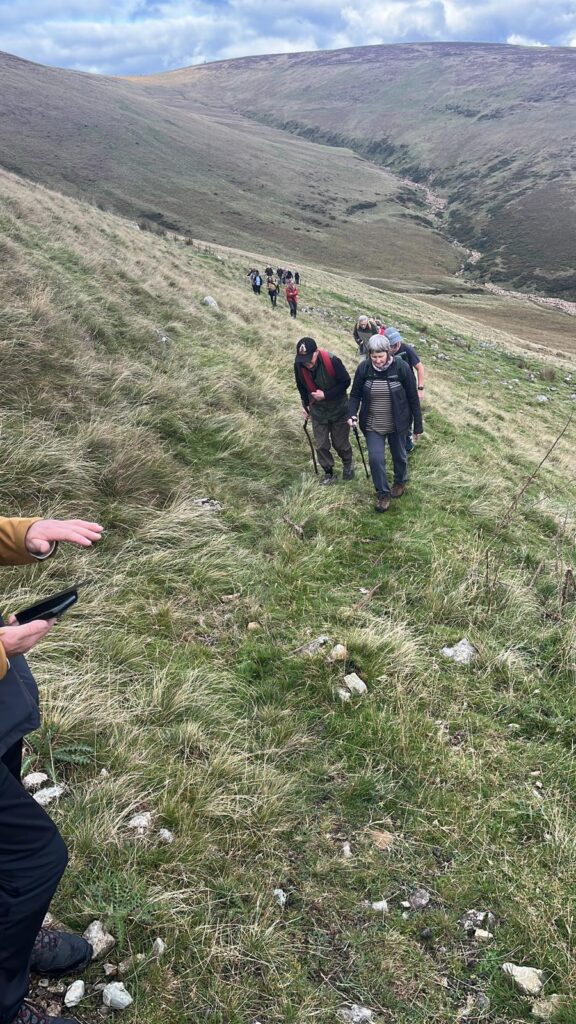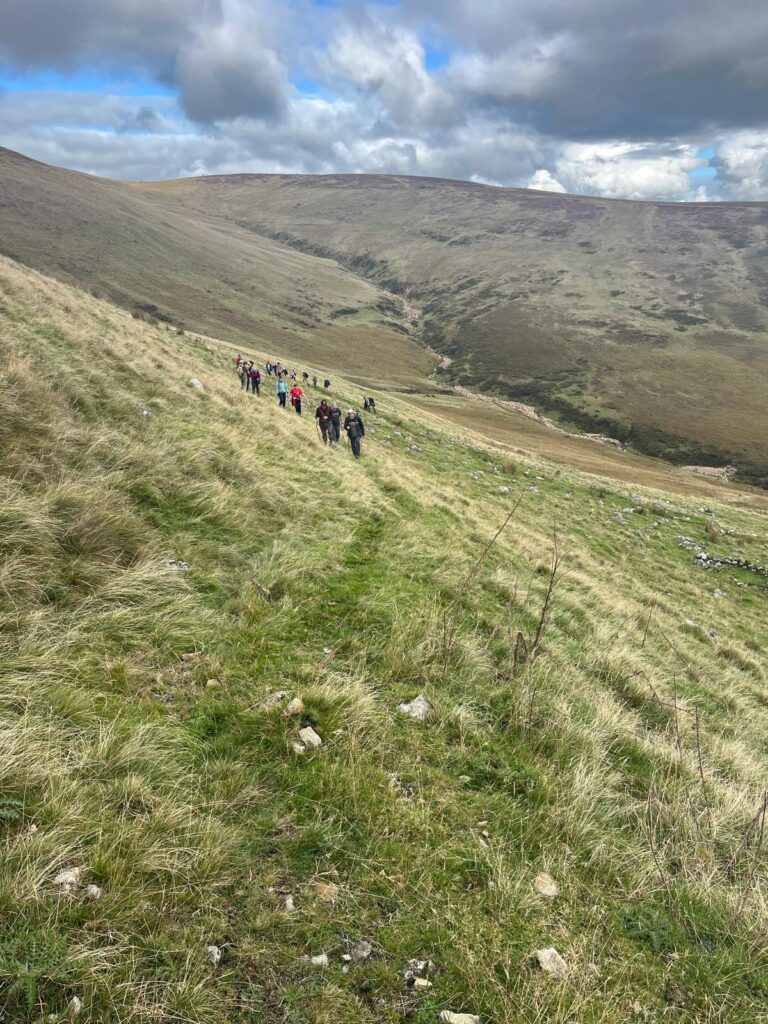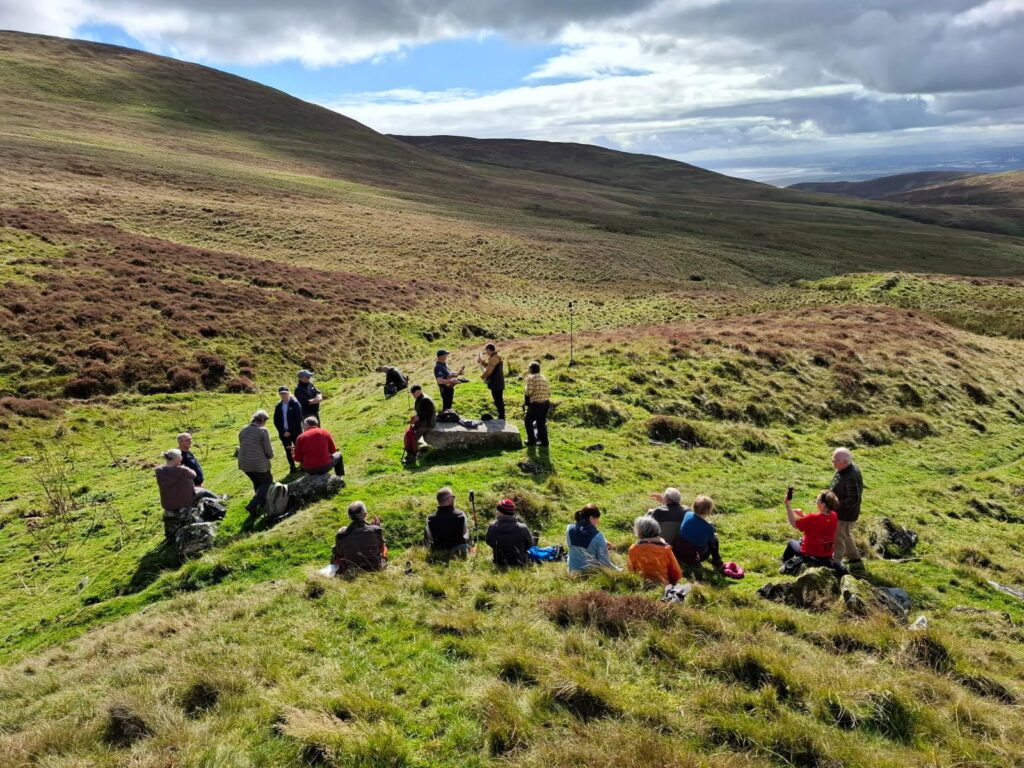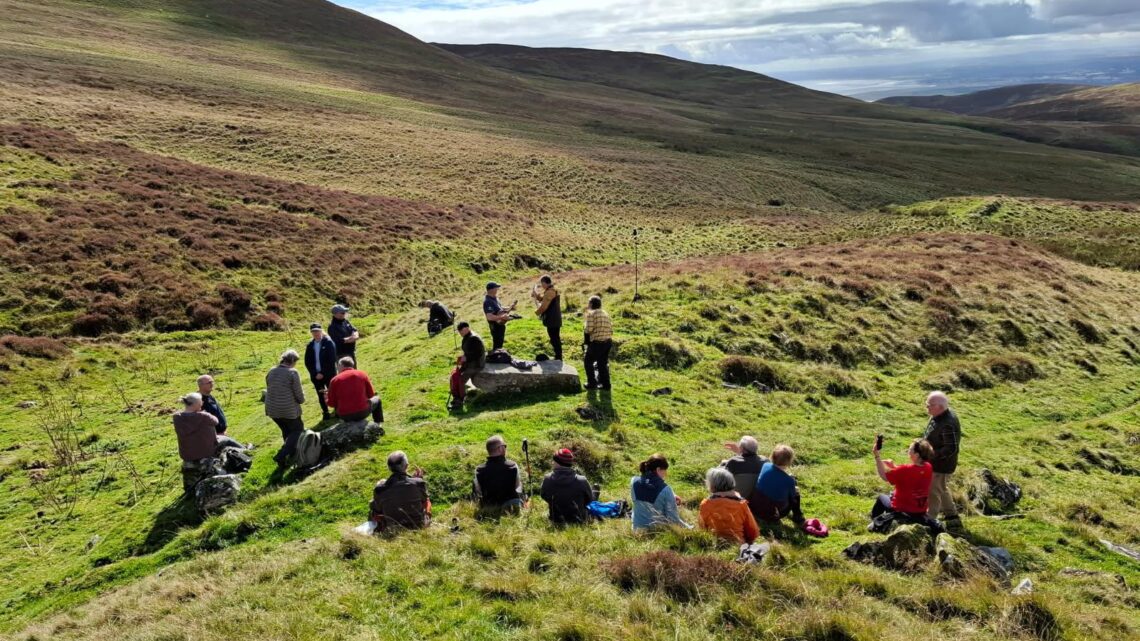
The Cadger’s Pad has captured the imagination of people in Omeath and Cooley. On Sunday 28th September they turned out in force to walk in the footsteps of their forebears, the girls and women who carried creels of herring across the mountains to Ravensdale and Dundalk. There was music and storytelling at the flat rock in Annaverna, stories of the stone brollies where sheep and geese were held on their way to market and how one cadger woman slipped and broke all the fine crockery she was carrying home from Dundalk.
The Cadger’s Pad is an ancient droving and commercial trail across the Cooley Mountains which was crucial to the social and economic development of the Omeath district. It was the shortest route to markets in Dundalk and the inland towns and villages of north Louth and was significant enough to be marked on early Ordnance Survey maps in the 19th century.
Fishing was the lifeblood of Omeath until the late 1800s. According to a survey by the Coastguard in the 1830s, there were more than 230 full and part-time fishermen in the winter herring season and as many again employed on land travelling around to sell the fish. The sellers were known as cadgers, a Middle English term similar to pedlar, monger or hawker. According to local tradition the men caught the fish but girls and women carried them to market, each with two stone weight of herrings wrapped in seaweed in wickerwork creels tied to their back.
It takes about two hours of hard walking to cross the mountains, climbing to a height of nearly 400 meters to cross the Iomaire Fada (Long Ridge). On the western side of the ridge there is a large flat rock in a sheltered glen by a stream where it is thought the cadger girls took their first rest: Tradition says they sometimes played cards there, so the rock is known as Cloch Imirte na gCartaí (Rock of Card-playing).
The herring fishing declined in the second half of the nineteenth century. There is just one surviving photograph of a cadger girl with her creel of fish: Annie Flynn, 1888.